Disappointing Ownership Experience With Our BombyxJet DTG Printer
BombyxJet Review: Our DTG Ownership Experience with BombyxJet
Shopping for a commercial DTG printer looks simple until you start asking ownership questions. Our company bought a BombyxJet for garment production, and this review is based only on the machine we purchased and how it has performed in our shop.
What mattered to us was the same thing that matters to most buyers: Print Quality, Maintenance, Ink Costs, Support, and Daily Reliability. Those issues shape profit and delivery times, so this review stays focused on shop-floor reality, not brochure claims.
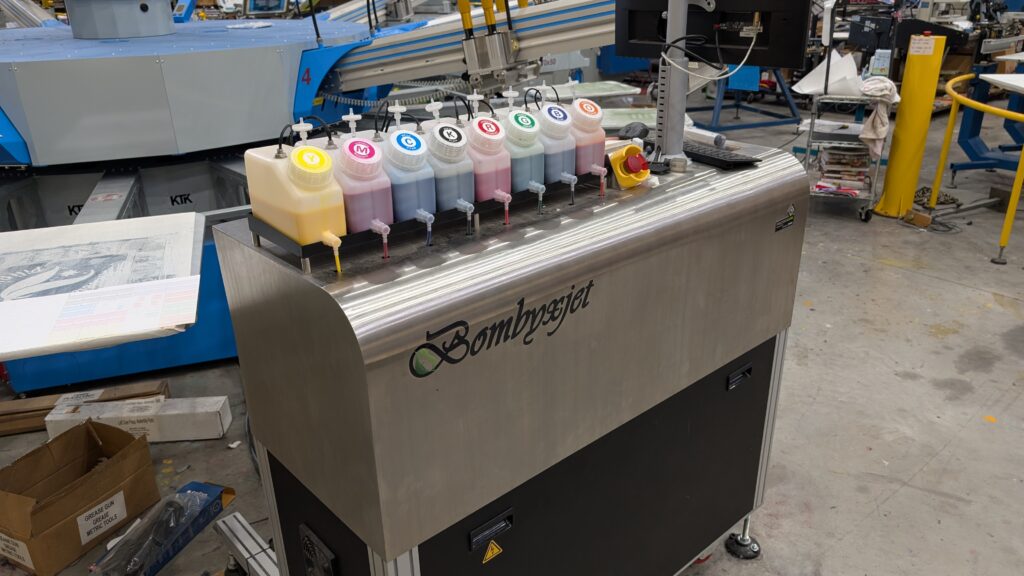
BombyxJet DTG printer reviewed in our shop.
What BombyxJet is and who it is built for
A BombyxJet is a direct-to-garment printer. That means it prints ink straight onto finished apparel instead of using screens or transfer films. If you want a plain-language refresher, Ordant’s explanation of direct-to-garment printing covers the basic process well.
Machines in this class usually target custom shirt shops, on-demand brands, and small to medium print operations. On paper, that makes sense. A DTG printer can look like a clean fit for full-color garment work without the setup time that screen printing needs.
BombyxJet Requires Screen Printing for Every Print
The BombyxJet is not just DTG without screen printing. Each print requires three screens, a white underbase screen, a glue screen, and a clear top coat screen. This adds extra setup, production steps, and time to the decorating process. If you are comparing BombyxJet to a standard DTG printer, it is important to understand that this is still a screen printing-based workflow, not a pure direct-to-garment solution.
How the BombyxJet DTG printer fits into a garment shop
In a working shop, this type of printer is meant for short runs, one-off orders, samples, and custom apparel jobs. It can fill the gap between manual methods and larger production systems. That is a big reason many buyers look at DTG in the first place.
If you sell custom tees, event shirts, or online merch, the appeal is easy to see. A printer like this promises full-color output without large minimums. For a small brand or a local shop, that can sound like the right tool at the right time.
We did not use the BombyxJet for short runs due to having to make 3 screens for every job that we wanted to print on it.
The promises buyers usually hear before purchase
Most buyers hear the same pitch before purchase. The printer is supposed to be easy to use, fast enough for daily work, consistent in print quality, and manageable without heavy operator effort.
Those promises are attractive because they match real shop needs. Still, they don’t tell you much about daily upkeep, stability, or how the machine behaves when actual customer orders are on the line. That gap between the pitch and ownership is where our experience changed.
The real ownership experience with BombyxJet in daily production
The hardest part of owning this printer has been the gap between the sales story and the day-to-day reality. In our shop, the machine has required far more cleaning, monitoring, and hands-on attention than we expected.
In commercial production, the feature that matters most is simple: the printer has to be ready when the order is due.
Clogged BombyxJet print heads during a nozzle check.
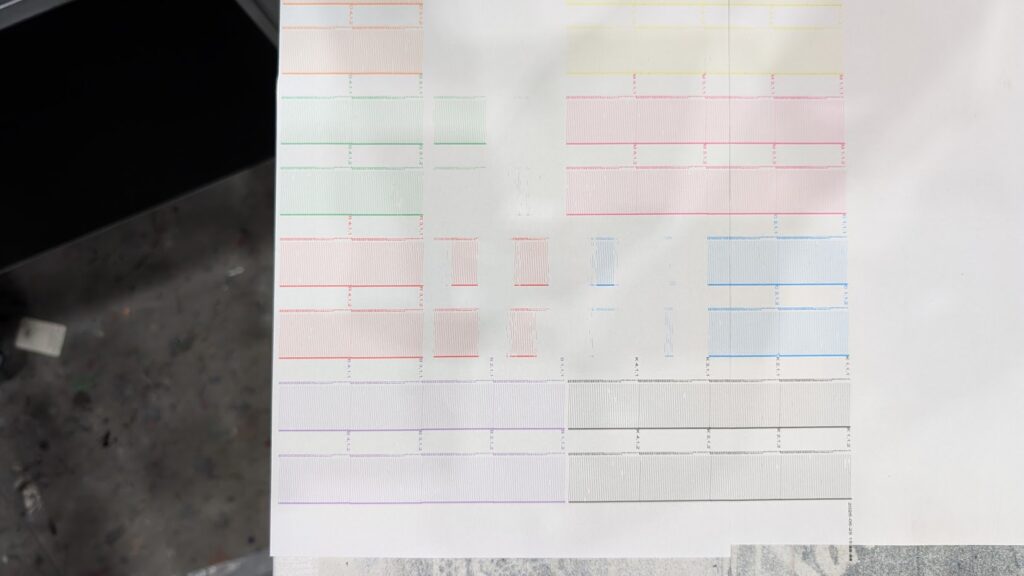
Why recurring clogging can slow a production schedule
Recurring clogging has been our biggest problem. When it happens, work stops. You don’t print shirts, pack orders, or move to the next batch. Instead, you run checks, clean the machine, test again, and hope the issue clears.
Even when a clog clears, the restart is not free. You may need extra nozzle checks and fresh test prints before you trust a customer garment under the platen. When nozzles misfire, print quality can show banding or weak coverage before the printer is fully unusable. That breaks rhythm and slows everyone around the printer.
The lost time spreads fast. A clogged printer can turn one order into a chain of delays because staff have to watch the machine instead of doing other shop work. It also leads to more wasted ink and less confidence that the next print will match the last one.
How much hands-on maintenance the machine may need
We expected routine care. What surprised us was how much babysitting this BombyxJet needed to stay production-ready. In our operation, the printer has required constant checking and regular cleaning. It has not felt like a machine you can trust, load, and leave alone for long.
We have had to think about the printer before, during, and after production. That kind of attention is tiring because it turns a production tool into a machine that demands ongoing supervision. A person keeps getting pulled back to it, even when other work needs attention.
That matters in a busy shop because labor has a cost. When one person has to keep circling back to a printer, that person is not pretreating garments, packing orders, or helping at heat presses. Buyers who expect a more automated experience should get very clear answers before they buy.
What temperamental behavior means for commercial reliability
Some printers settle into a reliable routine after setup. Our machine never reached that point. One day it may look ready. The next day it may need more attention before it can run with confidence.
That kind of temperamental behavior is hard on scheduling. A commercial shop needs steady output, not guesswork. If a printer is unpredictable, every promised turnaround becomes harder to manage. That is why production reliability matters more than a long feature list.
The broader DTG market still attracts buyers for good reasons, including short-run flexibility and full-color garment printing. You can see that wider positioning on Ricoh’s DTG page for print shops. Our issue is that the machine in our shop has not delivered the day-to-day stability we needed for commercial work.
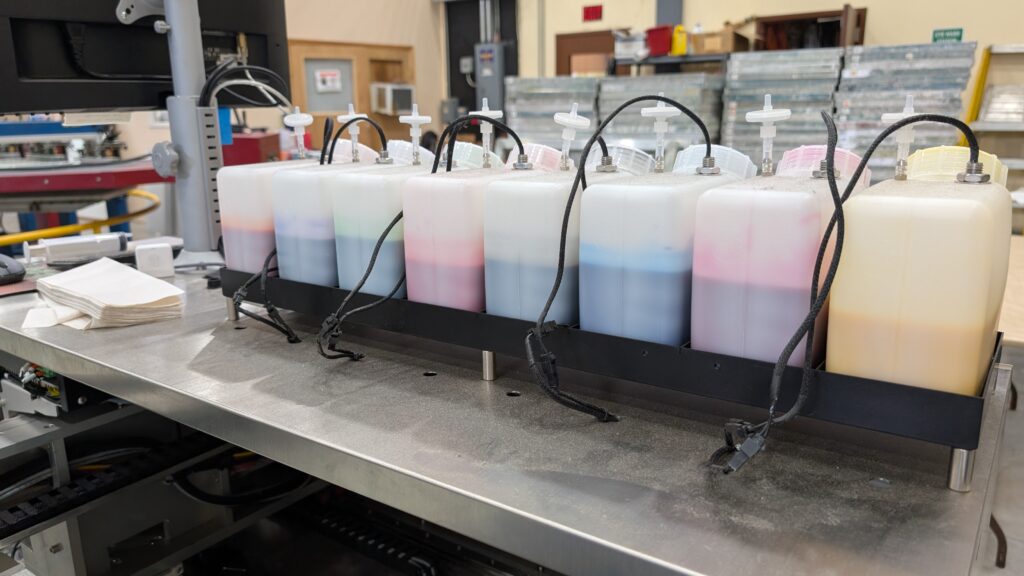
BombyxJet ink bottles used in our printer review.
The hidden cost of cleaning cycles and ink use
The purchase price gets most of the attention early on. After that, operating cost takes over. In our experience, cleaning cycles used a substantial amount of ink, and that changed the real cost of owning the machine.
Why cleaning cycles can raise the true cost per print
Extra cleaning does more than waste a few minutes. It also eats into ink supplies that were supposed to go into sellable prints. When that happens often, the true cost per shirt rises, even if the machine looked affordable at first.
That matters most for small-margin work. A shop might price a shirt based on normal ink use, then lose margin because maintenance used more ink than the print job itself. If you run frequent short orders, the cost can hit even harder because the same upkeep repeats across more small batches.
Questions to ask about ink usage before you buy
Ask for real numbers, not loose estimates. A seller should be able to explain how ink use looks on both quiet days and busy days.
- Ask how much ink the printer uses in a normal day, even when no customer orders run.
- Ask how much ink a standard cleaning cycle uses, and how often owners typically need to run it.
- Ask what share of total ink use usually goes to maintenance instead of finished prints.
- Ask for sample monthly ink costs at low, medium, and high production levels.
Support, downtime, and parts availability can make or break the deal
Support becomes a real issue the moment a production printer stops working. Fast answers matter because every hour of downtime can back up orders, labor, and shipping.
Why time zone gaps can stretch a simple problem into lost work
Technical support has been another major frustration in our case. The support team we dealt with was in Taiwan. Because of the time difference, it often took at least 24 hours to get a reply. When a printer is down, that delay turns a simple problem into lost production time.
The back-and-forth makes it worse. If the first reply raises a new question or asks for another test, you can lose another full day before the next step. A printer issue that might take one phone call with local support can stretch across several calendar days when each reply comes overnight. That pace is hard to accept when customers are waiting and the machine is tied to paid orders.
What to confirm about warranty, parts, and service response time
Get support details in writing before you buy. Verbal promises are easy to forget once a problem starts.
- Confirm what the warranty covers, and what it does not.
- Confirm whether replacement parts are stocked in the US or shipped from overseas.
- Confirm support hours, average response times, and how escalation works.
- Confirm whether help is remote only or if on-site service is available.
- Confirm who pays shipping, labor, and return costs during a warranty claim.
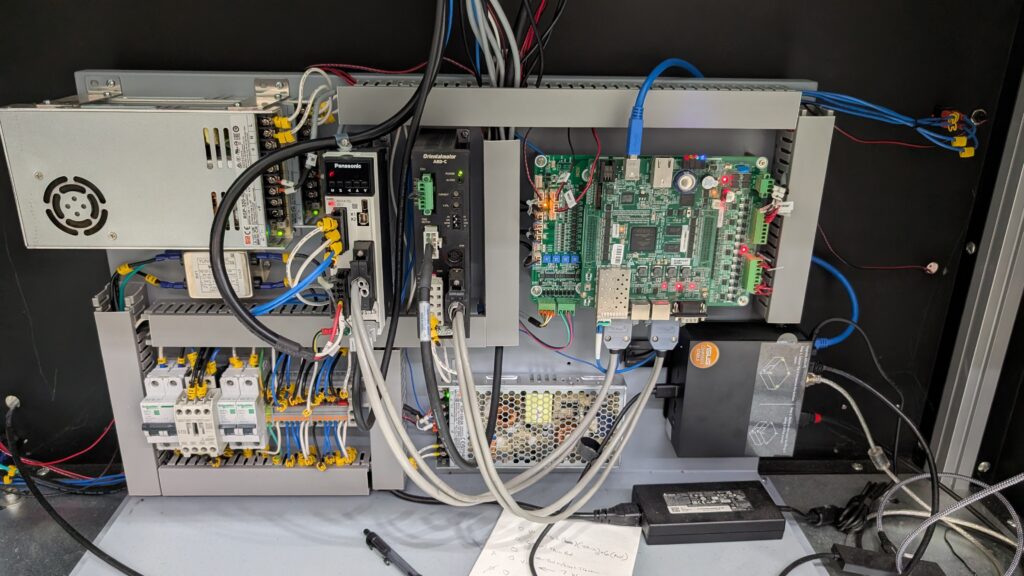
BombyxJet downtime during our review.
Questions to ask before you buy a BombyxJet printer
If you’re considering a BombyxJet, the goal is to avoid surprises after the sale. Many shops look at DTG because it can work well for custom tees and short runs, which is the same basic appeal shown on Broken Arrow’s DTG shirt printing page. But the right questions are about workload, uptime, and support.
Ask for logs, screenshots, or service records if the seller has them. A real example tells you more than a smooth answer on a sales call.
Daily and weekly maintenance details you should get in writing
Ask for a written breakdown of every daily and weekly task. You want to know what needs cleaning, how long each task takes, and what happens if the routine is skipped. If the answers stay vague, treat that as a warning sign.
Also ask who usually performs the work. A maintenance routine that sounds small in a demo can become a real burden once it lands on your staff calendar every day.
Production uptime, downtime, and cleaning ink estimates
Ask for expected uptime and common downtime causes in plain numbers. Ask how many cleaning cycles are normal in a week. Ask how much ink those cycles consume. Those figures matter more than broad claims about speed.
A printer can look good in a short demo and still struggle in daily production. Real operating numbers will tell you more about profit than a headline print-speed claim.
Training, service access, and replacement parts planning
Ask how training is handled after install, how support tickets are opened, and where the support team is based. You should also ask how long common parts usually take to arrive and what your shop is supposed to do while waiting.
These points shape long-term ownership. In our case, had we known more about clogging, maintenance, ink use, support delays, and operator attention, we would have chosen a different option.
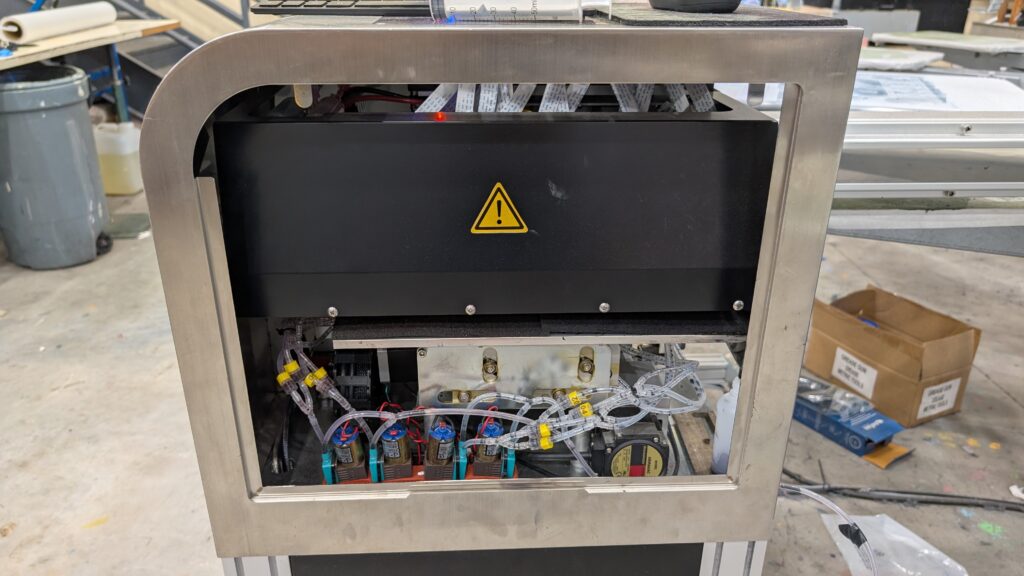
We would not buy the BombyxJet again.
Would we buy a BombyxJet DTG Printer Again
Our experience with the BombyxJet in commercial production has been disappointing. Recurring clogging, heavy maintenance, high ink use during cleaning, and slow support replies made it hard to trust the machine when orders were due.
Because of that, we would not buy this printer again. If a practical chance to replace or sell it came up, we would take it seriously. Buyers should judge any DTG printer by real production demands, then get every maintenance, cost, warranty, parts, and support detail in writing before they commit.
Questions About BombyxJet?
If you are considering a BombyxJet printer, reach out to us first. We can share our hands-on experience, what went wrong, and what we think buyers should know before making a decision. If you have questions, we are happy to talk through the details and help you decide if it is the right fit for your shop. Sometimes talking to an actual user can provide the insight you need to help you make a decision. Where sales people focus on selling you the machine, we can give you insights on how it is to own one in the real world.